

Smart Ring, App, or Smartwatch: Which Is the Leading Health Tech Solution in 2026? | Safe and Sound
A few years ago, most people only paid attention to their health when their bodies showed unusual signs. Health checkups usually occurred during routine checkups or when clear symptoms appeared. However, the development of technology has completely changed this habit.
With the advancement of technology, users can now easily monitor their daily health metrics at home. But with so many solutions available today, which is the most suitable healthcare technology option for 2026?
Why is technology playing an increasingly important role in healthcare?
Previously, health monitoring relied heavily on personal perception. If you felt tired, you thought you were lacking sleep. If you felt healthy, you assumed your body was in good shape. But in reality, that wasn't always the case.
Many health problems begin with very small changes that we may not notice with our usual senses. These could include a gradually increasing resting heart rate over time, decreased sleep quality, or persistent stress levels over several consecutive weeks.
Smart health tracking devices help convert those invisible signals into concrete data, making it easier for users to monitor and assess their health. This is also the foundation for the rapid development of AI healthcare solutions in recent years.
>> See also: What Is Health Monitoring? 6 Key Benefits in Modern Life
Trends in healthcare using technology
Today, with just a smartphone, smartwatch, or compact smart ring, users can monitor many important metrics such as heart rate, sleep quality, activity level, and blood oxygen levels right at home.
Health apps: The simplest solution for beginners
When it comes to healthcare using technology, health apps are often the first tool many people turn to. Modern health apps can provide support in the following ways:
- Track your daily steps.
- Record the amount of water consumed.
- Dietary management
- Weight monitoring
- Maintain personal health records.
- Connect with smart wearable devices.
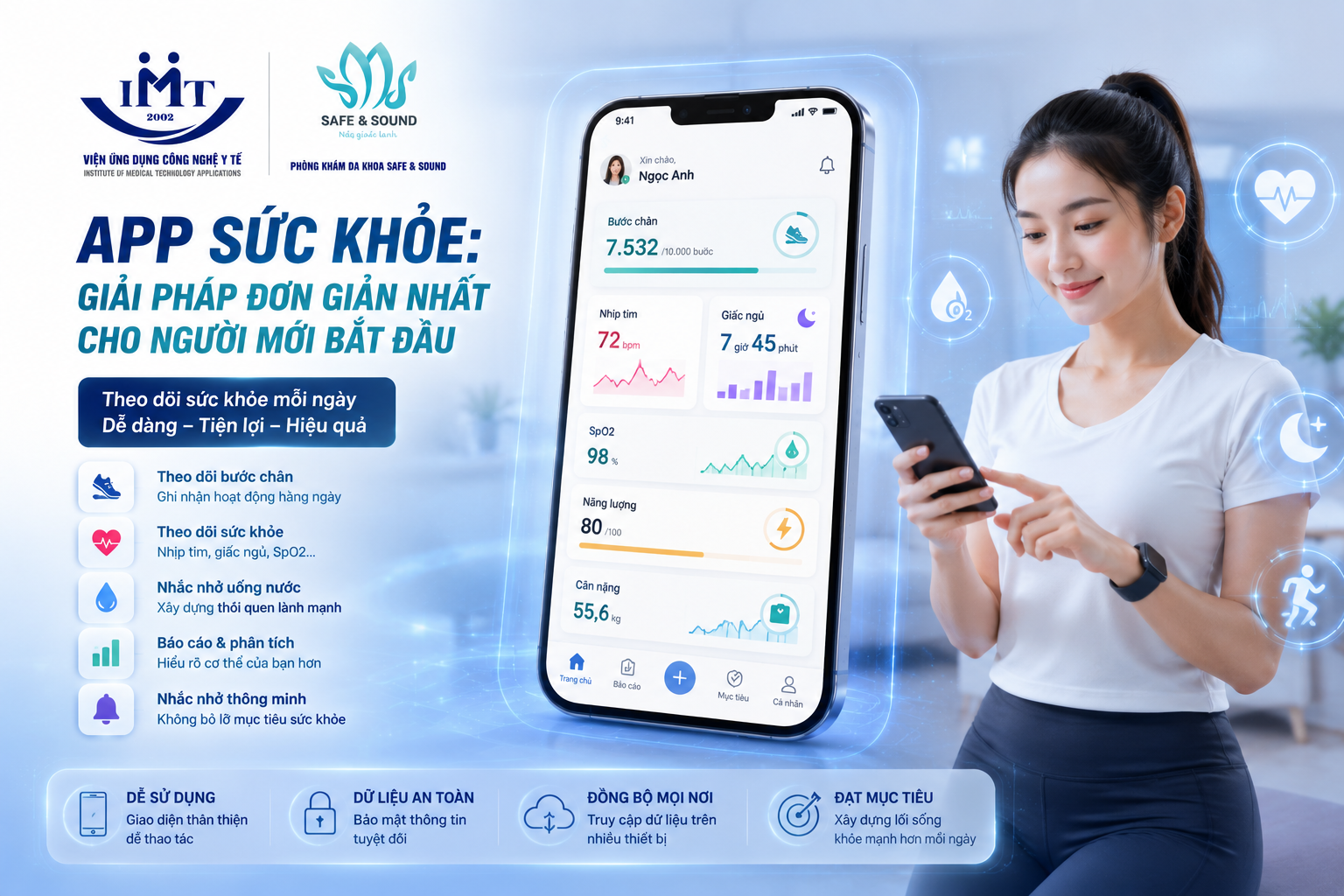
The biggest advantage of health apps is their ease of use and virtually no initial investment costs. However, a limitation is that data largely depends on user input or the use of sensors available on the phone. This means that continuous monitoring is not truly optimal.
Smartwatch: The most popular smart wearable device today.
Smartwatches were once a symbol of the wearable technology wave for many years. Besides supporting health tracking, smartwatches also integrate many features such as
- Receive call notifications
- Reply to the message
- Music control
- Track your sports training
- GPS positioning
- Electronic payment
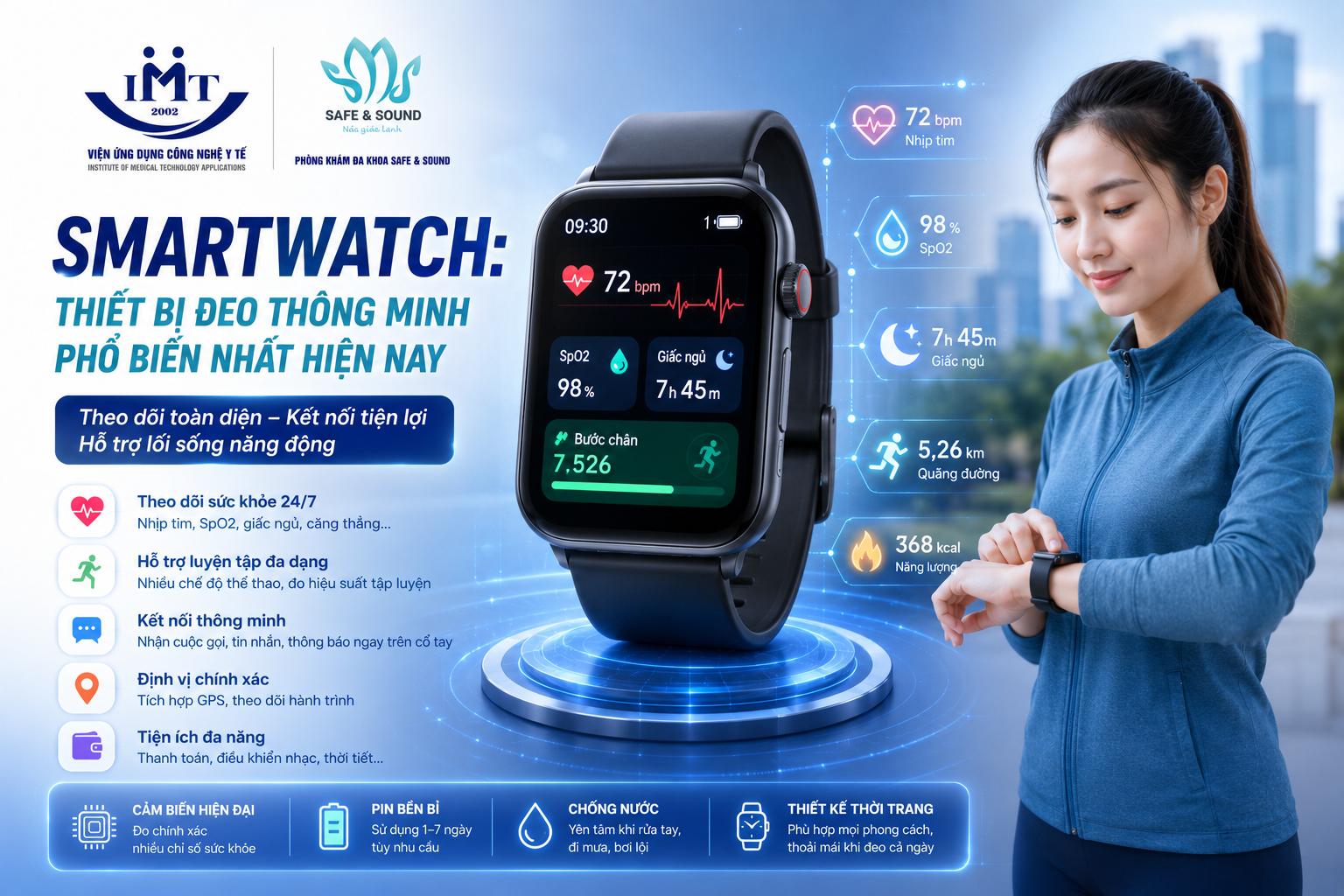
For tech enthusiasts, smartwatches offer a comprehensive experience. However, the longer people use them, the more they realize they don't really need all the features on their wrist.
Many people find it inconvenient to wear a watch while sleeping or during daily activities. This inadvertently disrupts the continuous collection of health data.
Smart Ring: The new trend of 2026
In recent years, smart rings have emerged as a new development in the health technology industry. Unlike smartwatches, smart rings are designed with a greater focus on health monitoring.
Inside a compact ring is a sensor system capable of recording a wealth of important biological data, such as:
- Heart rate
- SpO2
- Sleep quality
- Activity level
- Stress level
- The body's ability to recover.
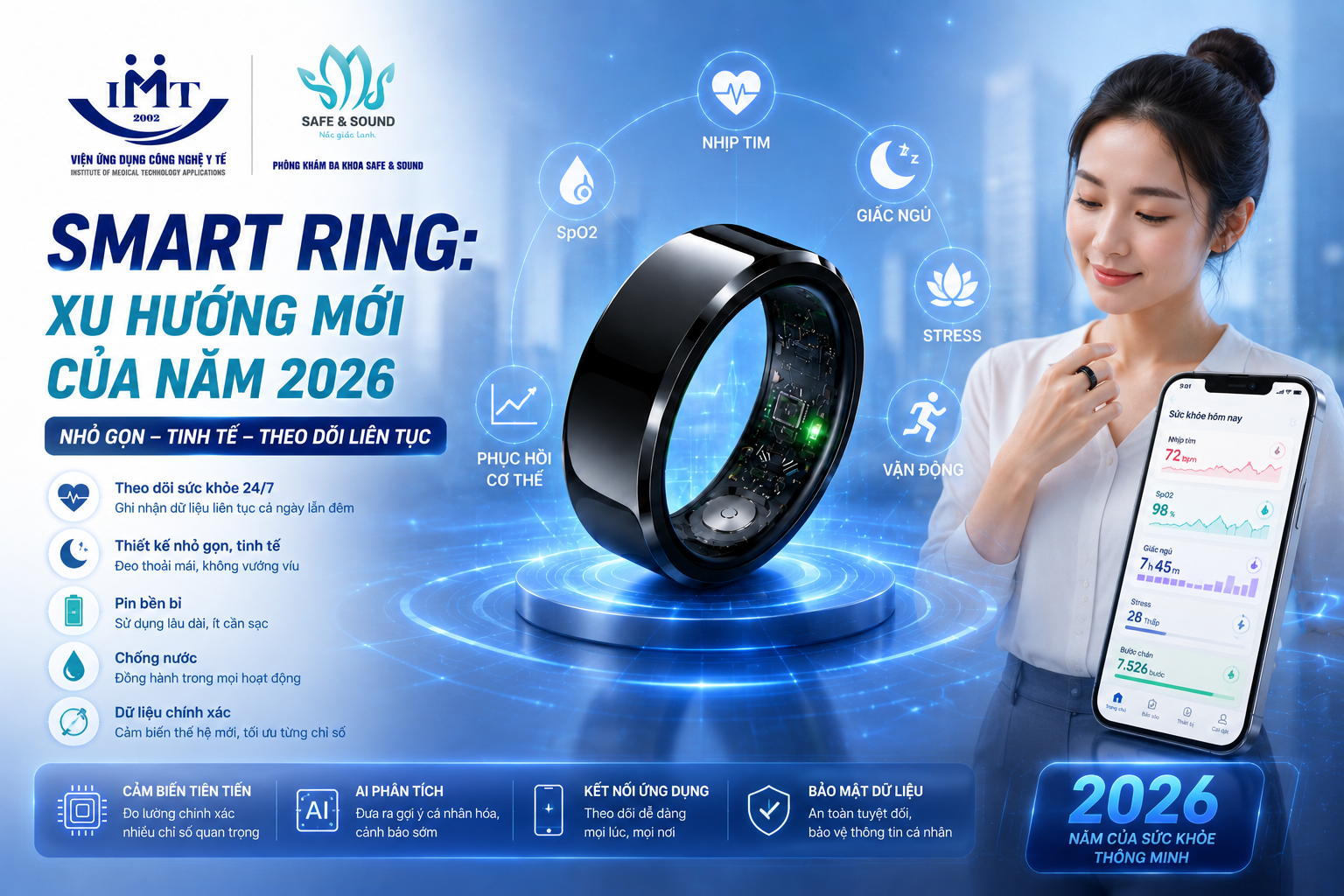
The biggest advantage of smart rings lies in the user experience. Users hardly feel like they are wearing an electronic device. This allows for more natural and continuous health monitoring throughout the day and night.
Comparing Smart Rings, Health Apps, and Smartwatches: Which is the Right Choice for 2026?
The development of technology has brought about more health monitoring solutions than ever before. With just a phone or a smart wearable device, users can access a wealth of data related to their bodies, such as heart rate, sleep quality, activity levels, and recovery ability after exercise.
However, between health apps, smartwatches, and smart rings, many people wonder which is the best choice for their needs.
In reality, each solution has its own advantages and is designed for different purposes.
Level of health data tracking
The ability to collect data is the most important factor when evaluating a technology-based healthcare solution.
For health apps, most data is collected via the phone or actively entered by the user. Information such as water intake, weight, diet, or exercise time often needs to be updated manually. This makes it easy for users to get started but is heavily dependent on daily usage habits.
Meanwhile, smartwatches possess a system of integrated sensors, allowing them to automatically track more metrics such as heart rate, calories burned, distance traveled, and some sleep-related indicators. This is why smartwatches were once a popular choice for tech enthusiasts and fitness lovers.
Smart rings take a different approach. Instead of integrating too many features, the device focuses on health monitoring. Sensors are optimized to record core data such as heart rate, SpO₂ sleep, stress levels, or the body's recovery ability. Thanks to their compact design and ability to be worn continuously, smart rings often facilitate longer-term data collection.
The important thing is that the value of the data lies not in the number of indicators measured but in its continuity and ability to accurately reflect changes in the body over time.
Everyday user experience
A health tracking device is only truly effective when the user can maintain a consistent long-term usage habit.
The biggest advantage of health apps is that they don't require additional equipment. With just a smartphone, users can start managing their personal health. However, automatic tracking capabilities are still limited, and much of the data isn't truly complete without connecting to smart wearable devices.
Smartwatches offer a more versatile experience. Besides health tracking, they support receiving notifications, making calls, controlling music, GPS positioning, and many other features. However, this very versatility can sometimes be a drawback. Many people find it uncomfortable to wear a watch while sleeping or during daily activities that require comfort.
In contrast, smart rings hardly alter users' daily routines. With a compact size similar to a regular ring, the device can be worn day and night without feeling cumbersome. This is one of the reasons why smart rings are gaining increasing attention in the field of personal health monitoring.
The ability to proactively manage healthcare.
While smart wearable devices previously focused primarily on data collection, the current trend is shifting towards proactive health care.
An application or device that only displays plain numbers will make it difficult for users to understand the true meaning of the data. For example, knowing that the heart rate is 82 bpm doesn't necessarily mean the user can recognize what health problems their body might be experiencing.
Modern health technology platforms are moving towards data analysis rather than just data storage. The systems can identify unusual changes, detect long-term health trends, and send alerts when necessary.
This is also an area where AI healthcare is making strong strides. Artificial intelligence can process large amounts of data collected from wearable devices, thereby providing personalized recommendations tailored to each user.
In the future, smart health tracking devices will not only help users understand their body's current state but also assist in explaining the causes and suggesting appropriate adjustments.
So which is the best option?
There is no single solution that fits everyone.
If you're just starting to take an interest in health, a health app is a simple and accessible option. If you need a versatile device for both work and exercise, a smartwatch is still a worthwhile choice.
However, if the primary goal is continuous health monitoring, building proactive healthcare habits, and leveraging future AI healthcare technologies, smart rings are emerging as one of the most noteworthy solutions in 2026.
>> See also: Should You Use a Smart Ring? 6 Reasons to Buy One for Health Tracking
How is AI healthcare changing the game?
The biggest difference between older and newer generations of smart wearables isn't how many metrics they measure. More importantly, it's their ability to understand the data.
AI Healthcare enables the system to:
- Analyzing long-term health trends
- Detecting abnormal signs
- Provide early warning.
- Personalized recommendations tailored to each user.
- Assisting in connecting you with healthcare professionals when needed.
Instead of looking at a series of confusing numbers, users can receive more specific, actionable information. This is also the direction many health technology platforms around the world are pursuing in 2026.
Who should choose a Smart Ring?
Many people often think that smart rings are only for tech enthusiasts or those who need in-depth health monitoring. However, in reality, this is a smart health tracking device suitable for a wide range of different groups of people.
The unique feature of smart rings lies in their ability to continuously monitor health without significantly altering daily routines. Therefore, whether you're an office worker, an athlete, or simply want to pay more attention to your health, this device can provide practical benefits.
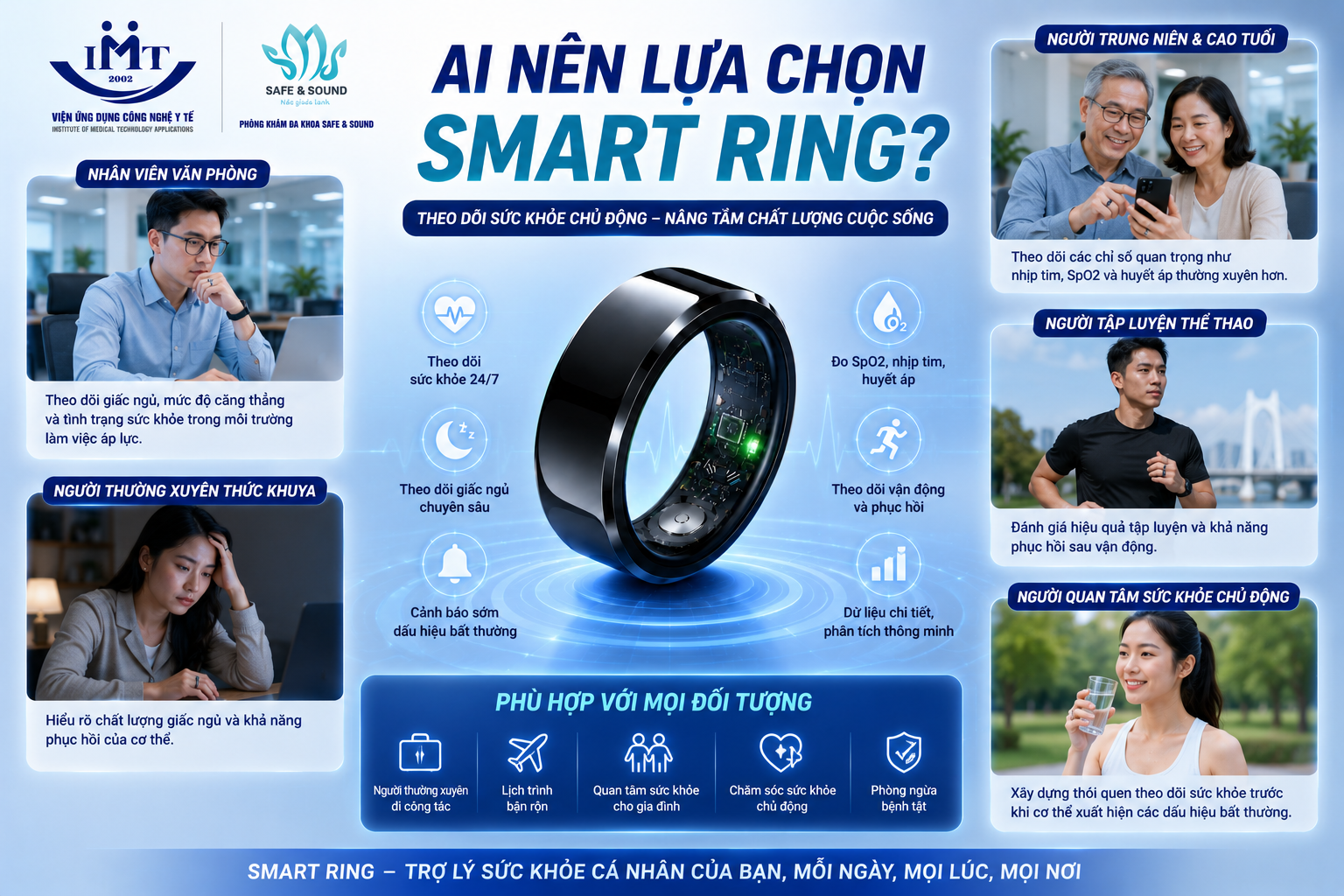
Office workers often work under pressure.
This group is at risk of experiencing numerous health problems related to modern lifestyles, such as prolonged stress, lack of exercise, insomnia, or prolonged sitting at work.
Despite spending most of their time in air-conditioned environments and engaging in little physical activity, many office workers frequently experience fatigue, lack of energy, and decreased sleep quality. However, these changes often occur gradually, making them difficult to detect.
Smart rings help track metrics such as heart rate, sleep quality, activity levels, and body recovery. Through continuously recorded data, users can identify abnormal signs and adjust their work and rest schedules accordingly.
People who frequently stay up late or don't sleep well.
Many people believe that simply getting 7-8 hours of sleep is enough for the body to fully recover. However, sleep duration doesn't fully reflect the actual quality of sleep.
Some people get enough sleep but have a very low rate of deep sleep. Others wake up multiple times during the night without even realizing it.
Smart rings can record detailed sleep data for each stage, helping users better understand the quality of their rest. This allows them to identify habits that negatively impact sleep, such as excessive phone use, working late, or prolonged stress.
Middle-aged and elderly people
As we age, regular health checkups become more important than ever. This is a stage where many health indicators can change without any obvious symptoms.
Indicators such as heart rate, SpO₂, blood pressure, or sleep quality can all reflect, to some extent, the overall health of the body.
Using smart rings allows middle-aged and older adults to conveniently monitor their health daily, rather than just checking during doctor's visits. Data stored over time also helps users easily identify unusual trends and proactively seek expert advice when necessary.

People who exercise and move around regularly
For sports enthusiasts, the effectiveness of training is not only measured by the number of kilometers run or the number of hours trained per week.
The body's ability to recover after exercise is also a very important factor.
The smart ring helps track heart rate, sleep quality, recovery level, and overall body condition after each workout. This data helps users understand when to increase training intensity and when to rest to avoid overtraining.
This is also why more and more athletes and sports enthusiasts are choosing smart rings as a tool to support long-term health monitoring.
People who travel frequently for business or have busy schedules.
People who travel frequently often struggle to maintain a consistent health and wellness routine. Constant changes in living environment, time zones, or work schedules can affect sleep, circadian rhythms, and energy levels.
Thanks to its compact design and long battery life, the smart ring can accompany users in all activities without causing inconvenience. Continuously recorded health data allows them to easily monitor their physical condition wherever they are.
People who are interested in proactive healthcare.
This is perhaps the group most suited to the current trend of technology-driven healthcare.
Instead of waiting for symptoms to appear before paying attention, these people want to understand their health better while they are still healthy. They view health monitoring as a long-term investment for the future.
Smart rings help build daily health monitoring and management habits through intuitive and easy-to-understand data. When combined with AI healthcare platforms and modern health apps, users not only know their metrics but also understand the implications of those changes for their bodies.
People who want to take care of the health of their whole family.
Besides monitoring their own health, many people now also want to manage the health of their parents, spouses, or children on the same platform.
Smart healthcare ecosystems allow for the centralization of data from various devices, making family health monitoring more convenient. This is a trend that many healthcare technology platforms have been developing in recent years.
As you can see, smart rings aren't just for a specific group of users but are suitable for anyone who wants to better understand their body. In the context of technology-driven healthcare becoming an increasingly popular trend, a compact device capable of continuously monitoring data can become a valuable personal health assistant for modern life.
Conclude
2026 marks a significant development in the trend of health care using technology. While health apps are the starting point and smartwatches are versatile devices, smart rings are gradually becoming specialized solutions for those who want to monitor their health continuously and proactively.
More importantly, the future of healthcare lies not only in data collection but also in the ability to analyze and provide relevant recommendations through AI healthcare. As technology becomes smarter, understanding your body every day may become a natural part of everyone's life.
.png)
Developed with the vision of a "proactive health monitoring device with a doctor's support," the IMT Ring not only supports monitoring metrics such as heart rate, SpO2, blood pressure, and sleep, but also aims to build a comprehensive healthcare ecosystem. Through its integrated AI technology platform and expert connectivity, users can easily monitor, manage, and better understand their health status every day.
If you're looking for a solution that helps you proactively monitor your health in a simpler and more convenient way in modern life, the IMT Ring could be a worthwhile option to start your health care journey with even the smallest changes each day.
